Employer Considerations Under the New Trump Administration

To prepare for potential changes to U.S. Immigration policies under the second Trump Administration, employers should consider the policies and practices implemented during President Trump’s first term, as well as available information about immigration goals and objectives introduced during the 2024 election cycle.  Importantly, while the foundations of U.S. Immigration are governed by federal laws that can only be changed through acts of Congress, much of current immigration policy, including immigration regulations, is controlled by Executive Branch Cabinet Departments and Administrative Agencies under the direction of the President. While we anticipate a large number of changes in U.S. immigration practice and process over the next 4 years, there are several larger trends that employers should plan to prepare for now.  These include the following. 

Initiate Nonimmigrant Visa Extensions and Green Card Processes Early

Prepare to start nonimmigrant and immigrant visa cases, including green card processes for employees, earlier than in years past. One of the potential changes that immigration attorneys anticipate from the new Trump Administration is an increase in decision timelines for many case types. The increased timelines may be caused by a variety of factors including reductions in the number of employees at US Citizenship & Immigration Services as well as delays caused by frivolous Requests for Evidence and other challenges to approvability. In anticipation of these increases, Parker Gallini recommends employers prepare to file cases earlier to accommodate additional government processing delays. Employers should consider preparing and filing H-1B extensions 6 to 8 months prior to the expiration of the current status or visa. Employers should also consider initiating the green card process at least 3 years in advance of a foreign national’s six-year maximum expiration for their H-1B visa. 

Prepare for Increased Government Inspections

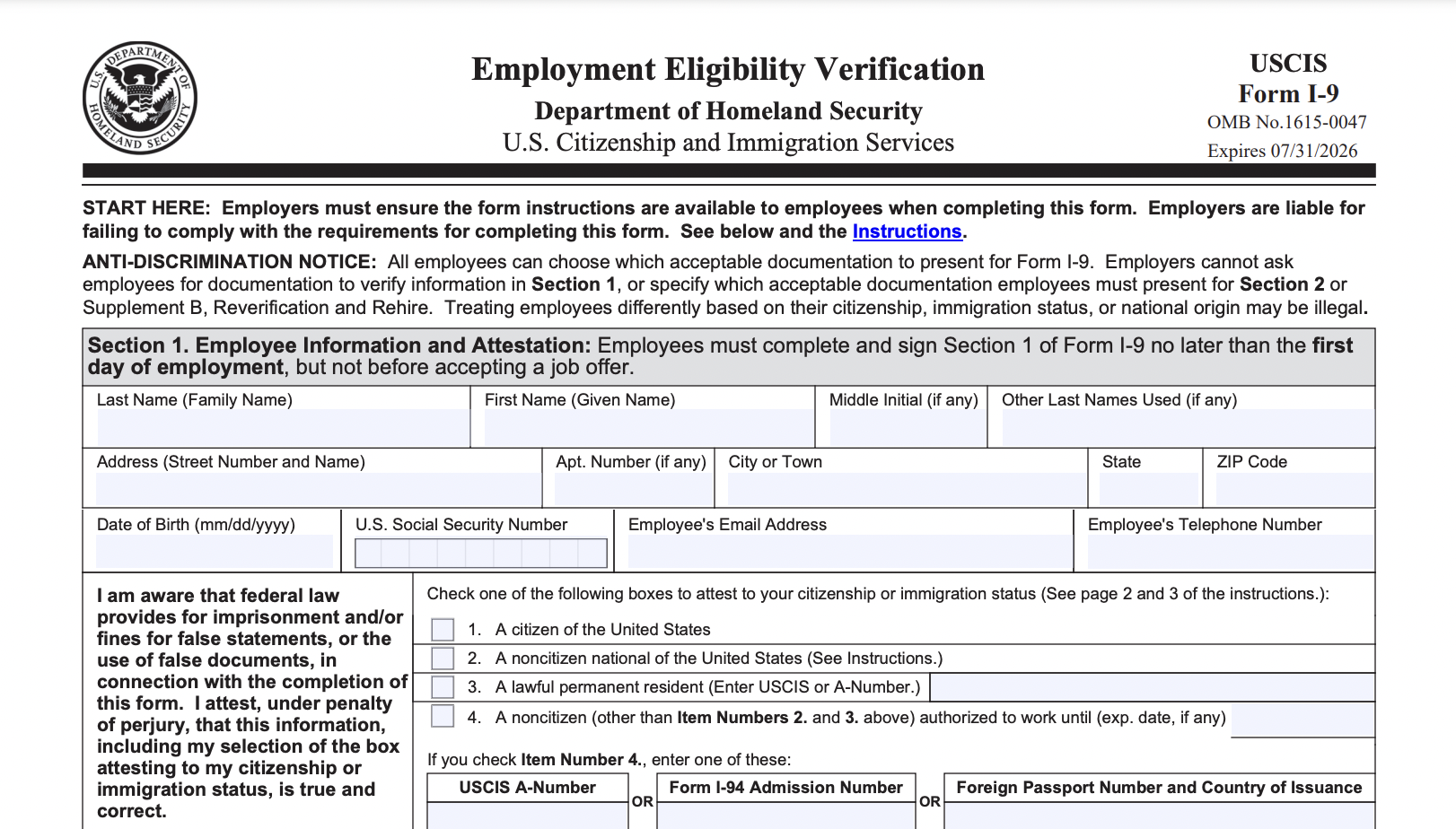
Employers should also prepare for an increase in compliance actions and government inspections of workplaces. Based on the actions of the prior Trump Administration, it is likely that this second Trump Administration will increase enforcement efforts, including I-9 Employment Eligibility Verification audits, workplace inspections, and compliance audits. The new Trump Administration may also push for the mandatory use of E-Verify in connection with employment eligibility verification compliance. Employers can prepare for such potential changes by ensuring their I-9 paperwork and any other visa compliance paperwork, including public access files, are complete, up to date, and well organized.

Encourage Employees to Limit International Travel and Plan in Advance when Necessary

Employers should tell their foreign employees to remain in the U.S. for the first several months of this Administration when possible. President Trump previously instituted travel bans for individuals from certain countries, and he indicated that he planned to close the border with Mexico as an early step in his new Administration. The current makeup of the U.S. Supreme Court suggests that any new travel ban based on an argument of national security may withstand this court’s review.  In addition, an early Executive Order by the new Administration calls for enhanced vetting and screening in connection with visa applications at US Consulates abroad.  This raises concerns about long wait time for visa applications and possibly erroneous visa denials.  Employers should emphasize to their employees who on visas that they should not travel internationally unless necessary. Employers should also ensure that employees have all necessary documentation for any international travel prior to the employee departing the United States. 

If you have further questions on any of the topics discussed above, please contact your Parker Gallini immigration attorneys.

Tagged with: , ,
Posted in Immigration Law

Skilled Immigration Under Trump: An Overview of the Early Impact of Two Executive Orders and the Federal Hiring Freeze

Executive Order 14160 – Birthright Citizenship

The Trump Administration seeks to eliminate the application of birthright citizenship in the case of children born of a mother who is either in the U.S. illegally or is here legally but on a temporary visa and whose father was not a U.S. citizen or permanent resident at the time of birth. This order has faced multiple legal challenges, as the principles of birthright citizenships are enshrined in the United States Constitution. To-date this executive order has been by federal judges in Seattle, Washington and Maryland. If the Trump Administration continues to seek implementation of this Executive Order, this issue will likely go to the Supreme Court for resolution. 

This order if it stands, will have a significant impact on immigration in the United States  by creating more obstacles for both family-related and employer-sponsored immigration.

Executive Order 14161 – Enhanced Vetting and Screening Across Agencies

The Trump Administration has ordered the Secretary of State, in coordination with the Attorney General, the Secretary of Homeland Security, and the Director of National Intelligence to develop procedures to vet and screen to the “maximum degree possible” foreign nationals who are applying for visas, admission to the U.S. or who are already inside the United States, particularly in the case of foreign nationals coming from regions or nations with identified security risks. This executive order largely reiterates the Trump Administration’s Proclamation 9645, from his previous term.  While we do not yet know the specific details of this enhanced visa vetting and screening process, it is highly likely that the processing of visa applications abroad and immigration benefits in the United States will be impacted both generally and specifically for citizens of countries that the United States deem to be security risks. One likely impact will be delays in the visa application process at US Consulates abroad.

Federal Hiring Freeze

The Trump Administration has announced a freeze on new hiring by most federal agencies, including the United States Citizenship and Immigration Services (USCIS), until the Office of Management and Budget (OMB) in consultation with the Director of the Officer of Personnel Management and the Administrator of the United States Department of Government Efficiency (DOGE) submit a plan to reduce the size of the Federal Government’s workforce through efficiency improvements and attrition. The USCIS is a very large agency within the federal government already struggling with understaffing. A freeze on hiring- especially during a transition between administrations, when many employees may retire or leave combined with any reduction in workforce, is likely to cause significant processing delays in skilled immigration applications across the board.

Tagged with:
Posted in Immigration Law

U.S. Immigration Considerations in a Second Trump Administration

Introduction

The first weeks of the Trump Administration have been full of activity, much of it aimed at the US immigration system.  To date we have seen multiple Executive Orders covering everything from a proposed erosion to the principles of birthright citizenship to instructions to the Secretary of State to articulate new processes for enhanced vetting of foreign nationals applying for visas abroad and for immigration benefits in the United States both generally and specifically from countries that present a security risk to the United States. We have also seen the President place a hiring freeze on most federal agencies, including the US Citizenship and Immigration Service and the US Department of Labor for at least 90 days.  These actions and others as well as the general rhetoric of President Trump signal significant changes to the US immigration system including changes that will directly impact “skilled” immigration. 

This article will outline areas where it is possible we will see changes that impact “skilled” immigration. It is based both on statements by President Trump, these early Executive Orders as well as on the actions taken in the first Trump Administration. 

As an initial matter, it is important to note that while the foundations of U.S. Immigration are governed by federal laws that can only be changed through acts of Congress, much of current immigration policy, including immigration regulations, are controlled by Executive Branch Cabinet Departments and Administrative Agencies under the direction of the President. Changes to immigration policy made through the passage of new laws, regulatory updates, policy directives to the U.S. Citizenship and Immigration Services (USCIS) and other agencies, and Executive Orders may all be challenged through lawsuits, which can impact implementation across the U.S. as court cases progress.

Policy and Practice that Can Change Quickly once the New Trump Administration Takes Office

USCIS and its related Administrative Agencies (Customs & Border Protection (CBP) and Immigration & Customs Enforcement (ICE)) have significant authority to alter existing policy and practice with respect to a wide range of issues under their respective authority.  The prior Trump Administration used this authority widely to create delays and uncertainty in the adjudication process and generally to slow down an otherwise already overburdened system to an even great extent.  

The following are actions that the new Trump Administration can take in this regard:

  • The adoption of policies that will “protect the interests of U.S. workers in the administration of our Immigration system”.  This was the stated intention of an early Policy Memorandum  issued by the prior Trump Administration called “Buy American, Hire American”.  We can expect to see similar actions from the new Trump Administration. Covered under this heading were a wide range of policy and practice changes including the aggressive use of Requests for Additional Evidence (RFEs) challenging the approvability of H-1B and L-1 cases and an attempt to alter the way prevailing wages are calculated in the Green Card process, which would have increased required wages well beyond market if the changes had been fully implemented. More likely than not, the new Trump Administration will again move to implement these or similar policies.
  • Mandatory Interviews and Expanded Biometrics.  The prior Trump Administration adopted several new procedures in this area: (i) requiring that all Adjustment of Status applications (the final stage in the Green Card process) have as a last step an in-person interview at a USCIS Field Office and (ii) requiring that all change of status and extension of status applications for derivative family members (H-4 and L-2, as an example) have a Biometrics appointment at a USCIS Application Support Center (ASC).  The direct result of these changes was to dramatically slow the adjudication process down for these cases because Field Offices and ASCs were suddenly overwhelmed by tens of thousands of in-person appointments that were not previously required.  The Biden Administration ended these policies, but we expect that the new Trump Administration will bring them back quickly.
  • Potential Elimination or Scaling-Back of Premium Processing.  The prior Trump Administration eliminated for a period of time Premium Processing as an option for certain types of cases (including H-1B and L-1 visa petitions) citing overburdened USCIS Service Centers.  The result of this was not only longer processing times for common employment-based visa petitions, but also uncertainty in their approval.  The new Trump Administration could do the same.  In addition, the new Trump Administration could do away with the Biden Administration policy of applying Premium Processing to derivative cases for spouses and children that are filed with, and currently processed concurrently with, a principal foreign national worker’s Premium Processed visa petition. In practice, for example, this could mean that the spouse and/or child of an H-1B worker would have to wait several months for an approval of H-4 status, even if the principal’s H-1B is approved with premium processing,
  • Expiration of the H-4 Settlement.  In early 2023, the USCIS, in response to a lawsuit,  agreed to formally bundle the processing of H-4 and L-2 dependent extension and change of status applications (including H-4 and L-2 EAD applications) with the principal foreign national worker’s H-1B or L-1 visa petition.  Under the prior Trump Administration, the USCIS had processed each application separately, in accordance with the policy described above.  This meant that family members were often waiting for much longer periods of time to get their H-4 and L-2 status extensions and EADs approved.  This settlement expired on January 25, 2025, and we are starting to see cases in which the USCIS is not approving H-4 status and EAD extensions after approval of the principal’s H-1B.  To-date the USCIS has not stated publicly whether it intends to extend the terms of the settlement or abandon it entirely.  The latter seems likely at this point, and this decoupling of H-4 extensions from H-1B processing will create significant hardship and delay particularly for H-4 spouses working on EADs.
  • Introducing New Forms/Processes.   A particularly challenging action taken by the prior Trump Administration was to require that a new form be submitted with an Adjustment of Status Application to show that the applicant is not at risk of becoming a “public charge.”  Federal immigration law provides that someone who is or has the potential to become a “public charge” cannot become a U.S. permanent resident. In family-based cases, a process exists for the USCIS to assess this risk, and the family-based immigration process  requires that the sponsoring U.S. citizen show that they have adequate income or assets to provide support for their sponsored foreign family member if necessary. In employment-based cases, the public charge risk is usually satisfied by virtue of the fact that the sponsored foreign national has a job offer with the U.S. employer. However, the prior Trump Administration required that a new public charge form be submitted with all Adjustment of Status applications. The form was excessive both in length and in the dozens of documents that were required to be submitted to show the financial status of the applicant. Again, this process increased legal fees and slowed the overall processing time of Adjustment of Status applications. While the new Trump Administration could bring this form back, it is also an example of the types of actions that the Administration could take with respect to forms and required supporting documents for many types of applications that will increase costs, place evidentiary burdens on sponsoring employers and their employees, and delay processing times.
  • Repeal of the Deferred Action on Childhood Arrivals (DACA) Program.  The prior Trump Administration tried to eliminate the DACA program put into effect by former President Barack Obama, but was stymied by the Federal Courts.  President-elect Trump has indicated that he wants to eliminate DACA, and it is likely that this is a step he will take.  Given the current make-up of the U.S. Supreme Court, the new Trump Administration has an increased chance of success in this regard. Currently, many thousands of immigrants are living and working in the U.S. based on DACA program work authorization. If DACA is eliminated, this work authorization will be lost.
  • Potential Travel Bans.  President-elect Trump has indicated that he plans to close the border with Mexico as an early step in his new Administration generally and he has already closed the border to applicants for political asylum.  The New Trump Administration may decide to use travel bans as a bargaining chip in discussions with other countries or may seek travel but ban for countries that are deemed to be a security threat.  While the  “Muslim” travel ban of the prior Trump Administration was ultimately struck down by the Federal Courts, the current makeup of the U.S. Supreme Court suggests that any new travel ban based on an argument of national security may withstand judicial scrutiny. In this regard we have advised our clients to advise their foreign employees to remain in the U.S. for the early months of the new Trump administration when possible.
  • Elimination of Parole and Related Work Authorization. Parole is a discretionary status that a U.S. President can authorize for urgent humanitarian reasons or significant public benefit. President Biden authorized significant parole programs for citizens of Cuba, Haiti, Nicaragua, and Venezuela in an effort to provide a legal option for U.S. entry and to dissuade eligible applicants from entering the U.S. without proper documents. President Biden also authorized structured programs for Humanitarian Parole for Afghan and Ukrainian citizens in response to large scale military conflict in both nations. Currently, tens of thousands of people benefit from temporary status and work authorization based on these parole programs. These programs can easily be undone by the new Trump Administration which would leave current beneficiaries without another viable status option and ultimately require that they depart the U.S. or face removal.
  • Increased Compliance Initiatives. Based on the actions of the prior Trump Administration, it is likely that the new Trump Administration will increase enforcement efforts including I-9 Employment Eligibility Verification audits, workplace inspections, and compliance audits. The new Trump Administration may also push for mandatory use of E-Verify in connection with employment eligibility verification compliance. 

Policy That May Change Within the First 1-2 Years of the New Trump Administration

The new Trump Administration will have the authority to change the U.S. economic policy with regard to global trade partners, and incoming Executive Branch Cabinet Department Secretaries and Administrative Agency Directors will have the authority to promulgate new regulations in support of the new Trump Administration’s objectives. It will likely take several months or longer for the consequences of changed economic and trade policies to develop, and federal rulemaking requirements include mandatory timelines for implementing new regulations.

The following are changes that may unfold over the first 1-2 years of the new Trump Administration:

  • Potential Repeal of USCIS “Deference” Regulation.  In the closing week of the Biden Administration, a regulation as finalized to formally adopt a policy of granting deference in the adjudication of temporary visa status extensions provided that there has been no significant change in the underlying terms of eligibility.  One of the first actions taken by the prior Trump Administration in 2016 was to withdraw a version of this policy that at the time was simply an administrative guideline.  This action ushered in a significant increase in USCIS’ issuance of Requests for Additional Evidence or RFEs.  While our Firm was able to get the vast majority of cases approved after responding to RFEs, these additional RFEs increased the costs for our client and added significant delays to the processing of these cases. If the new Trump Administration wants to eliminate the Deference Policy, it will have to promulgate a new regulation to that effect. But this is a relatively easy process that would take several months. 
  • H-1B Lottery Criteria May Change. The prior Trump Administration attempted to base H-1B lottery selection criteria on offered wages. Specifically, the prior Trump Administration created regulations that would rank H-1B lottery registrations based on the offered wage, giving preference to lottery registrations that include an offered wage that aligns with the Dept. of Labor’s Occupational Employment Statistics (OES) Level IV wage or higher and proceeding in descending order. The new Trump Administration could re-implement this policy or create new policy by updating immigration regulations.  We note that at this time, the new Administration has taken no action to alter the process of the up-coming FY2026 H-1B Cap Lottery that will take place at the end of March 2025.
  • Treaty-Based Visas May be Jeopardized by Tariffs. President-elect Trump has promised to implement tariffs with a number of the U.S.’ most prominent trade partners, notably including Canada and Mexico. The U.S., Canada, and Mexico entered into the USMCA Trade Agreement during the prior Trump Administration, replacing NAFTA. Currently, the USMCA authorizes temporary TN immigration status and work authorization for Canadian and Mexican professional workers in a limited number of occupations. If the new Trump Administration takes drastic action by implementing high tariffs, trust in U.S. trade agreements like the USMCA may erode, and other countries could leave these agreements. In the case of the USMCA, this could mean an end to the TN immigrant status option.   
  • Termination of Temporary Protected Status (TPS) Designations. Current U.S. regulations authorize issuance of Temporary Protected Status (TPS) to citizens of Afghanistan, Burma (Myanmar), Cameroon, El Salvador, Ethiopia, Haiti, Honduras, Lebanon, Nepal, Nicaragua, Somalia, South Sudan, Sudan, Syria, Ukraine, Venezuela, and Yemen. TPS allows citizens of these countries who have been continuously present in the U.S. for a specified period to have legal status and work authorization in the U.S.  President-elect Trump has signaled an intention to eliminate TPS by refusing to renew current TPS designations, which will expire between mid-2025 and the Fall of 2026, depending on the specific country.  Without renewed TPS designation, current TPS beneficiaries will lose status and work authorization in the U.S.  We note that on February 1, 2025, the President terminated TPS for Venezuela effective as of the end of current extended Venezuelan TPS status in April and September of 2025.  
  • Elimination of Employment Authorization Document (EAD) Eligibility Categories. Over the last several years, USCIS has established new categories of work authorization by regulation, including extended work authorization for graduates of qualifying U.S. STEM degree programs (STEM OPT) and work authorization for the spouses of H-1B nonimmigrants who have reached certain milestones in the green card process (H-4 EADs). Under a new Trump Administration, these or other categories of work authorization could be eliminated, in line with the stated goal of eliminating competition for U.S. workers. In particular, given the current structure of the annual H-1B visa lottery, the potential elimination of STEM OPT could have significant consequences for foreign national graduates seeking employment-based immigration sponsorship. 

Systemic Changes to Immigration Law and Policy that May Change in the Long Term

Significant change to the foundations of current U.S. Immigration would require Congressional action. Given the composition of the current Congress, which includes a narrow Republican majority in the House of Representatives and the Senate, change at this level may be possible. However, current Senate rules require a 60-vote majority for legislative action, so bipartisan support would be required for most initiatives.

If Congress is able to enact new laws impacting immigration, changes could include a number of shifts that President-elect Trump has signaled during the prior Trump Administration and the 2024 election cycle, including:

  • Implementation of a Point-Based Immigration System. Such a system could include consideration of extraordinary talent, specialized vocation, advanced degrees, job creation, and wages.
  • Elimination of Certain Family-Based Visa Categories. Changes could leave limited pathways for family-based immigration, potentially including only the spouses and minor children of U.S. Citizens and Lawful Permanent Residents (LPRs / Green Card Holders).

The impact of the new Trump Administration on U.S. immigration including “skilled” worker immigration will likely be significant and occur early in the new Administration.  Parker Gallini LLP will continue to keep our clients up to date on these changes as they occur.  

Tagged with: ,
Posted in Immigration Law

Immigration Quick Takes — August 2024

U.S. Immigration News

H-1B Cap Statistics

The United States Citizenship and Immigration Services has released data detailing the efficacy of the new beneficiary-centric H-1B registration system. Particularly, the average number of registrations submitted per beneficiary decreased by 38.6 percent, with the overall number of registrations submitted in general decreasing from 758,994 for FY2024 to 479,342 for FY2025. This data functions as evidence of the reduction of misuse within the new beneficiary-centric system, with an average of 1.06 registrations being submitted per foreign national, as opposed to last year’s 1.70. USCIS has reiterated their commitment to preventing fraud within the H-1B registration process, emphasizing their continued steps to investigate, deny, and revoke H-1B petitions filed fraudulently.

During the FY2025 H-1B Cap registration process, USCIS received registrations for approximately 442,000 unique beneficiaries – of these beneficiaries, approximately 114,017 were selected (or approximately 25.8 percent). On July 30, 2024 USCIS announced that it would be conducting a second random selection for regular cap from the previously submitted FY 2025 H-1B cap registrations. This will include those registrations initially submitted under the master’s cap eligibility. USCIS has not yet named a date that the second lottery selections will be announced 

If you have any questions about the H-1B registration or filing process, or about the second lottery, please contact your Parker Gallini attorney.

Update on Stateside Visa Processing

The State Department’s stateside visa renewal pilot program opened on January 29, 2024, and accepted applications until April 1. This program was to serve as a test for the Department’s technical and operational capabilities to handle domestic visa renewals.

Following the conclusion of the application period, applicants expressed issues with the application process, stating that the steps were unclear. Specifically, the American Immigration Lawyers Association (AILA) reported that many applicants did not know what to do after completing the DS-160 (Online Nonimmigrant Visa Application). Additionally, the instructions directed applicants to use the “portal,” but did not state what or where the portal was. AILA members also reported that because Mission-specific scheduling links were difficult to find, many applicants were left anxious and confused about “program availability, visibility of next steps, and access.”

Despite the confusion some aspects of the program caused, AILA members reported an overall positive experience participating in the pilot program. Specifically, processing times were faster than the expected 6-8 weeks and members reported that having the ability to renew domestically “provided efficiency, security, and consistency in the visa renewal process.” The State Department has indicated their intention to run a broader stateside visa renewal program in the future, but has not yet indicated a timeline, or what the program might look like. 

If you have any questions about the stateside visa renewal pilot program or its potential expansion, please contact your Parker Gallini attorney.

August Visa Bulletin

For the month of August 2024, USCIS will accept employment-based Adjustment of Status applications based on the final action chart, while family-based petitions will continue to use the dates for filing chart. Despite warning from the State Department that retrogression or unavailability would be likely under the EB-3 final action category, no such retrogression or unavailability has yet occurred. However, the State Department has indicated that retrogression is likely to occur in September. 

The August 2024 visa bulletin reflects forward movement by one month for EB-2 and EB-3 Final Action dates for India. All other employment-based chargeability categories remain the same. 

Individuals who continue to have backlogged priority dates may have the opportunity to secure additional H-1B extensions as needed while awaiting visa bulletin advancement. Those with pending Adjustment of Status applications that remain backlogged can continue to renew EADs and Advance Parole documents as needed and may have opportunities to port employment. Consult with your Parker Gallini attorney if you have any questions about these options.

New Forms and Filing Addresses

On April 1, 2024, USCIS began implementing new form editions for Form I-129, Petition for a Nonimmigrant Worker, and Form I-140, Immigrant Petition for Alien Workers, amongst other forms. Although USCIS typically provides a grace period after new forms are published during which it will also accept the prior edition of the forms, this was not possible this time as the new forms contain changes necessary for the administering of the increased USCIS filing fees that also went into effect on April 1st. Any filing using the prior edition of a form which was postmarked prior to April 1 was accepted by USCIS.

With the form edition updates, USCIS has also shifted filing locations of I-129 petitions requesting H-1B or H-1B1 classification be filed with one of several USCIS lockbox addresses as opposed to directly at the Regional Service Centers. In the intervening months, this has caused some delays in petition receipts, including delays in the issuance of premium processing receipts.

Note that because H-1B and H-1B1 visa petitions are now filed at USCIS lockbox addresses, it is possible to pay the USCIS filing fees for these cases using a Credit Card and Form G-1450 instead of checks.  Instructions can be found here: https://www.uscis.gov/pay-with-a-credit-card.  Parker Gallini attorneys note that USCIS’ credit card processing has been inconsistent, with USCIS inexplicably rejecting some filings using this payment method. 

The new lockbox addresses are available on the USCIS website. If you have any questions about new form editions, filing locations, or payment methods please contact your Parker Gallini attorney.

Visa Appointment Availability

While the average visa interview lasts only a few minutes, some applicants can spend over a year waiting for their interview to even take place. The Department of State (DOS) notes on their website that the estimated wait time to receive an interview appointment at a U.S. embassy or consulate is based on workload and staffing and can vary from week to week. While there are various reasons for these wait times, such as the lasting effects of the COVID-19 pandemic, one significant factor currently impacting wait times is rising demand.

According to the DOS, demand is at unprecedented levels, with more nonimmigrant visas being issued worldwide in 2023 than in any other year since 2015. As a result, wait times for interviews are longer than before the pandemic in some locations. However, the DOS remains focused on reducing wait times for visitors requiring in-person interviews and continues using new tools to improve efficiency.

The DOS maintains a chart on their website with estimated wait times depending on the consular or embassy office, however these are only estimates and do not necessarily reflect real wait times at specific offices. One reason for this is that the system doesn’t factor people making multiple appointments or visa brokers who make many appointments that aren’t attached to an actual applicant. Additionally, some consular and embassy offices face other impediments, such as fraud.

Despite these obstacles, the DOS maintains their goal that more than 90 percent of overseas posts will have visitor visa interview wait times under 90 days in 2024. If you have any questions about how interview wait times may affect you, please contact your Parker Gallini attorney.

Tagged with: , , ,
Posted in Immigration Law

USCIS Filing Fee Increases

On January 31, 2024, the U.S. Citizenship and Immigration Services announced a final rule adjusting their fee schedule for immigration benefit requests.

Because USCIS is primarily funded by fees charged to applicants and petitioners for immigration and naturalization benefits, periodic adjustments to the fee schedule are necessary to the agency’s functioning. USCIS has stated that they plan to use the additional revenue from the increased fees to continue addressing application backlogs and improving processing times.

Below are some significant highlights of the final rule:

  • Employers filing either a Form I-129, Petition for Nonimmigrant Worker, Form I-129CW, Petition or a CNMI-Only Nonimmigrant Transitional Worker, or Form I-140, Immigrant Petition for Alien Worker, will now be responsible for paying an Asylum Program Fee of $600. Nonprofit petitioners will be exempt from this fee, while small employers will only be responsible for paying $300.
  • The final rule defines “small employers” as those with 25 or fewer full-time equivalent employees. Employers who fall within this definition will receive discounts on some fees and be exempt from others.
  • Forms filed online, rather than by physical filing, will receive a $50 discount. This discount is not applied in the event the form fee is already provided at a substantial discount or in the event USCIS is prohibited by law from charging a full cost recovery level fee.
  • USCIS will begin charging separate filing fees for both Form I-131, Application for Travel Document, and Form I-765, Application for Employment Authorization, when filed concurrently with Form I-485. The decision to unbundle these forms came with the intent to make USCIS processing times more efficient by eliminating Forms I-765 and Forms I-131 for individuals who are not in need of their benefits. 

As detailed in the final rule, USCIS filing fee increases will be as follows:

Form I-129, Petition for Nonimmigrant Worker*

Immigration/Visa Benefit

Prior Fee

New Fee (effective April 1, 2024)

Fee Increase

H-1 Classifications

$460 

$780

$320

H-1 Classifications (small employers and nonprofits)

$460

$460

$0

Petition for L Nonimmigrant workers

$460

$1,385

$925

Petition for L Nonimmigrant workers (small employers and nonprofits)

$460

$695

$235

Petition for O Nonimmigrant workers

$460

$1,055

$595

Petition for O Nonimmigrant workers (small employers and nonprofits)

$460

$530

$70

Petition for  Nonimmigrant Worker: E, H-3, P, Q, R, or TN Classifications

$460

$1,015

$555

Petition for  Nonimmigrant Worker: E, H-3, P, Q, R, or TN Classifications (with biometric services)

$545

$1,015

$470

Petition for  Nonimmigrant Worker: E, H-3, P, Q, R, or TN Classifications (small employers and nonprofits)

$460

$510

$50

Petition for  Nonimmigrant Worker: E, H-3, P, Q, R, or TN Classifications (small employers and nonprofits) (with biometric services)

$545

$510

-$35

*Please note that any employer filing a Form I-129, Petition for a Nonimmigrant Worker, will also be charged a new Asylum Program Fee of $600. 

I-539, Application to Extend/Change Nonimmigrant Status

Immigration/Visa Benefit

Prior Fee

New Fee (effective April 1, 2024)

Fee Increase

Application to Extend/Change Nonimmigrant Status (online filing)

$370

$420

$50

Application to Extend/Change Nonimmigrant Status (online filing) (with biometric services)

$455

$420

-$35

Application to Extend/Change Nonimmigrant Status (paper filing)

$370

$470

$100

Application to Extend/Change Nonimmigrant Status (paper filing) (with biometric services)

$455

$470

$15

I-140, Immigrant Petition for Alien Workers*

Immigration/Visa Benefit

Prior Fee

New Fee (effective April 1, 2024)

Fee Increase

Immigrant Petition for Alien Workers

$700

$715

$15

*Please note that any employer filing a Form I-140, Immigrant Petition for Alien Worker, will also be charged a new Asylum Program Fee of $600. 

I-485, Application to Register Permanent Residence or Adjust Status

Immigration/Visa Benefit

Prior Fee

New Fee (effective April 1, 2024)

Fee Increase

Application to Register Permanent Residence or Adjust Status

$1,140

$1,440

$300

Application to Register Permanent Residence or Adjust Status (with biometric services)

$1,225

$1,440

$215

I-131, Application for Travel Document

Immigration/Visa Benefit

Prior Fee

New Fee (effective April 1, 2024)

Fee Increase

Application for Travel Document

$575

$630

$55

Application for Travel Document (with biometric services)

$660

$630

-$30

I-765, Application for Employment Authorization

Immigration/Visa Benefit

Prior Fee

New Fee (effective April 1, 2024)

Fee Increase

Application for Employment Authorization (online filing)

$410

$470

$60

Application for Employment Authorization (online filing) (with biometric services)

$495

$470

-$25

Application for Employment Authorization (paper filing)

$410

$520

$110

Application for Employment Authorization (paper filing) (with biometric services)

$495

$520

$25

In addition to the fee increases listed above, the H-1B Registration Process Fee will increase for FY2026 from $10 to $215, while the Biometric Services fee will decrease from $85 to $30. Additionally, as previously announced, fees associated with requests for premium processing have increased depending on the immigration benefit for which they are filed.

For a full listing of updated fees across employment-based and family-based cases, please see USCIS’ website here. USCIS also provides a fee calculator, which may assist in the determination of estimated fee costs. For any questions regarding how you will be impacted by USCIS’ fee increases, please contact your Parker Gallini attorney.

Tagged with: ,
Posted in Immigration Law

Immigration Quick Takes — January 2024

Immigration Quick Takes

Stateside Visa Processing

On December 21, 2023, the Department of State announced that, for the first time in almost two decades, they will process domestic visa renewals for certain H-1B applicants. This will take place as part of a pilot program beginning the week of January 29, 2024.  This voluntary pilot program will apply to approximately 20,000 eligible participants who meet the following requirements:

  • Applicants must be seeking to renew an existing H-1B visa;
  • The H-1B visa being renewed must have been issued by a US Consulate in Canada with an issuance date from January 1, 2020, through April 1, 2023, or by a US Consulate in  India with an issuance date from February 1, 2021, through September 30, 2021;
  • Applicants must not be subject to a visa reciprocity fee;
  • Applicants must be eligible for a waiver of the in-person interview requirement;
  • Applicants must have submitted ten fingerprints in connection with a previous visa application;
  • Applicants must not have a visa ineligibility that would require a waiver prior to visa issuance;
  • Applicants must have an approved and unexpired H-1B petition;
  • Applicants must have been most recently admitted to the United States in H-1B status;
  • Applicants must currently be maintaining H-1B status in the United States;
  • Applicants’ period of authorized admission in H-1B status must not have expired; and
  • Applicants must intend to reenter the United States in H-1B status after a temporary period abroad.

The program will serve as a test for the Department of State’s technical and operational capabilities to resume domestic visa renewals for specific nonimmigrant visa classifications. If the program is successful and is expanded, it will significantly reduce workload at US Consular posts abroad and increase their capacity to adjudicate and process other types of visas.  It will also alleviate the often-encountered uncertainty faced by U.S. companies employing temporary workers reliant on petition-based visas.  

The Department of State will accept applications from January 29 to April 1, 2024 on a phased-in basis. We will provide updates as the Department of Status expands this new program. Please contact your Parker Gallini attorney if you have any questions about or to determine your eligibility for this program.

5-Year EADs

The United States Citizenship and Immigration Services (USCIS) has increased the maximum validity period for both initial and renewal Employment Authorization Documents (EADs) for the below listed noncitizen categories to five years. In contrast, previous USCIS guidelines only allowed for a maximum validity period of one or two years for these categories. This revised directive is applicable to any Form I-765, Application for Employment Authorization, currently pending or filed on or after September 27, 2023, for the following categories of noncitizens:

  • Refugees;
  • Noncitizens paroled as refugees;
  • Asylees;
  • Recipients of withholding of removal;
  • Applicants for asylum or withholding of removal;
  • Applicants for adjustment of status; and
  • Applicants for suspension of deportation or cancellation of removal.

It’s important to note that a noncitizen’s maintenance of employment authorization will still hinge on their underlying status, individual circumstances, and their specific EAD filing category. The updated guidance offers additional details on which categories of noncitizens are automatically authorized to work and provides clarity on those who can present a Form I-94 as proof of employment authorization.Please contact your Parker Gallini attorney to determine if and how you might be affected by this change.

Increase in Premium Processing Fees

On December 27, 2023, the United States Citizenship and Immigration Service (USCIS) unveiled a final rule, adjusting the filing fee for Form I-907, Request for Premium Processing. Following the passage of the USCIS Stabilization Act in 2020 – which established the current premium processing fees and granted the Department of Homeland Security (DHS) the authority to biennially modify them – the fees have remained unchanged for three years. However, DHS has now opted to raise the premium processing fees charged by USCIS for all eligible categories in an effort to reflect inflation from June 2021 through June 2023. As detailed in a press release announcing the final rule, the specified increases are as follows:

Form Previous Fee New Fee
Form I-129, Petition for a Nonimmigrant Workers $2,500 for E-1, E-2, E-3, H-1B, H-3, L-1A, L-1B, LZ, O-1, O-2, P-1, P-1S, P-2, P-2S, P-3, P-3S, Q-1, TN-1, and TN-2 nonimmigrant status.

$1,500 for H-2B and R-1 nonimmigrant status.

$2,805 for E-1, E-2, E-3, H-1B, H-3, L-1A, L-1B, LZ, O-1, O-2, P-1, P-1S, P-2, P-2S, P-3, P-3S, Q-1, TN-1, and TN-2 nonimmigrant status.

 $1,685 for H-2B and R-1 nonimmigrant status.

Form I-140, Immigrant Petition for Alien Worker $2,500 for EB-1A extraordinary ability, EB-1B outstanding professor or researcher, EB-1C multinational executive or manager, EB-2 professional with advanced degree (both with and without a National Interest Waiver), EB-3A skilled worker, EB-3B professional, and EW3 unskilled worker, new arrival.  $2,805 for EB-1A extraordinary ability, EB-1B outstanding professor or researcher, EB-1C multinational executive or manager, EB-2 professional with advanced degree (both with and without a National Interest Waiver), EB-3A skilled worker, EB-3B professional, and EW3 unskilled worker, new arrival.
Form I-539, Application to Extend/Change Nonimmigrant Status $1,750 for F-1, F-2, M-1, M-2, J-1, J-2, E-1, E-2, E-3, L-2, H-4, O-3, P-4, and R-2 nonimmigrant status. $1,965 for F-1, F-2, M-1, M-2, J-1, J-2, E-1, E-2, E-3, L-2, H-4, O-3, P-4, and R-2 nonimmigrant status.
Form I-765, Application for Employment Authorization $1,500 for F-1 students with categories pre-completion OPT, post-completion OPT, and 17-month extension for STEM OPT. $1,685 for F-1 students with categories pre-completion OPT, post-completion OPT, and 17-month extension for STEM OPT.

The fee changes will go into effect on February 26, 2024. Beyond this immediate adjustment, USCIS aims to implement biennial increases in premium processing fees, ensuring a continuous alignment with inflation trends and safeguarding the genuine monetary value of the premium processing service they offer. The funds generated from these fee adjustments are intended to support various aspects of USCIS’s operation, including enhancing premium processing services, refining adjudication processes; addressing adjudication demands, including reducing processing backlogs for benefit requests; and providing financial backing for USCIS adjudication and naturalization services. Please contact your Parker Gallini attorney with any questions regarding these adjustments.

H-1B Proposed Rule

On October 20, 2023, the Department of Homeland Security (DHS) published a Notice of Proposed Rulemaking aimed at modernizing the H-1B specialty occupation worker visa program. The proposed changes are designed to streamline eligibility criteria, enhance program efficiency, offer greater benefits and flexibility for both employers and workers, and fortify integrity measures to combat visa misuse and fraud.

One significant alteration involves the H-1B registration selection process. Currently, a higher volume of registrations submitted on behalf of an individual increases their likelihood of being selected in the H-1B lottery. The proposed rule seeks to level the playing field by ensuring that each unique individual, irrespective of the number of registrations submitted on their behalf, enters the selection process only once. This modification is expected to enhance the chances of legitimate registrations being selected, as it would diminish the advantage of submitting multiple registrations for the same beneficiary solely to increase selection odds. 

The proposed rule also introduces adjustments to the criteria for specialty occupation positions. The aim of such adjustments is to reduce confusion among the public and adjudicators, clarifying that a position may permit a range of degrees if there is a direct relationship between the required degree field(s) and the position’s duties. The rule also emphasizes that adjudicators should generally defer to a prior determination when no underlying facts have changed during a new filing, and proposes codification of USCIS policies with respect to when an H-1B amendment is required. Additionally, the rule would expand H-1B cap exemptions for certain nonprofit entities and governmental research organizations, as well as the beneficiaries not directly employed by them. Flexibilities for F-1 visa students seeking to change to H-1B status would also be extended, and new eligibility requirements for entrepreneurs would be established. Lastly, the rule would also codify USCIS’s authority to conduct site visits and would clarify that non-compliance with site visits may result in petition denial or revocation. Please contact your Parker Gallini attorney with any questions regarding this proposed rule.

Tagged with: , , , , ,
Posted in Immigration Law

Parker Gallini Ranked Nationally by Best Law Firms 2024

Best Law Firms - National Ranking in Immigration LawParker Gallini LLP is pleased to announce that it has been recognized in the 2024 edition of Best Law Firms, published by Best Lawyers.

The firm has received a Tier 1 ranking in Metropolitan Boston for immigration law, as well as a national Tier 3 ranking in immigration law.

The Best Law Firms rankings are based on a combination of client feedback, information provided on its Law Firm Survey, the Law Firm Leaders Survey, and Best Lawyers peer review.

Read more at: Best Law Firms Ranks Parker Gallini in Immigration Law.

Parker Gallini’s Best Law Firms listing.

Tagged with: , ,
Posted in Immigration Law

Alternate Visa Options for Life Science Companies

Healthcare Workers

By Abigail Swanson, Immigration Attorney

While the most discussed temporary working visa is the H-1B, and the most used employment sponsored Green Card processes begins with the Labor Certification Application, there are several alternative temporary work visas and employment-based processes. Some of these give Life Science companies an advantage in hiring and retaining certain categories of foreign workers.

Read article on our website…

Posted in Uncategorized

Recent I-9 Updates

By Shelley Starzyk, Immigration Attorney

The Department of Homeland Security (DHS) recently announced a series of changes to the Form I-9 verification process and compliance rules. Below is a summary of the relevant changes that could impact employers.

Form I-9 COVID-19 Flexibilities Ended on July 31, 2023, and Employers Must Attain Compliance by August 30, 2023.

DHS announced that the Form I-9 flexibilities in place since the start of the COVID-19 pandemic will end on July 31, 2023. As of August 1, 2023, employers must return to verifying a new employee’s I-9 work authorization documents in person within the first three days of the employee starting employment.

Employers will also need to complete in person verification of the I-9 supporting documents for employees hired between March 20, 2020, and July 31, 2023, who previously provided their I-9 documentation of work authorization virtually. Employers must complete the I-9 in person document verification process for these employees prior to the August 30, 2023 deadline. For employees continuing to work remotely, employers can utilize designated representatives (family, friends, or acquaintances over 18 years of age) to assist with the in-person verification of documents and completing Section 2 of the Form I-9.

Because of these changes, Parker Gallini recommends employers immediately take proactive steps to re-verify I-9 documents for employees who virtually presented their I-9 work documentation during the COVID-19 pandemic.

DHS Announces New Alternative Procedure Available to Participating E-Verify Employers

Recently, DHS announced a new Form I-9 alternative procedure, available only to qualified E-Verify employers who are enrolled and in good standing with the E-Verify program. This new alternative procedure is now available. In some cases, qualified employers may use this alternative procedure for reverification of I-9 documentation verified remotely during the COVID-19 pandemic. This alternative procedure consists of a series of steps allowing for remote I-9 verification of documents. The alternative procedure requires the employer to take the following steps within the first three days of employment:

  1. The Employer must request and examine copies of employee’s Form I-9 documents (front and back of all two-sided documents) to ensure documentation reasonably appears genuine;
  2. After examining the documents provided, the Employer must then conduct a live video interaction with the employee presenting the Form I-9 documents on video to ensure documents reasonably appear to be genuine and related to the individual;
  3. The Employer must indicate on the Form I-9 that they used the alternative procedure to examine documents in the appropriate section;
  4. The Employer must retain a clear and legible copy of all verified documentation (front and back if applicable); and
  5. The Employer must make available the clear and legible copies of the identity and employment authorization documentation presented by the employees under this alternate procedure for the I-9 verification/reverification process in the event of an I-9 audit or inspection.

It is important to note that DHS permits employers the option of using these new alternative procedures. Employers may choose to continue only in person I-9 verifications. If an employer chooses to utilize this alternative procedure, they must consistently apply the procedure, and maintain consistent records. Employers cannot discriminate in determining employee eligibility for the alternative procedure. Employers should either use this alternative procedure for all employees consistently, or they can consistently apply alternative procedure for remote employees only and perform an in-person verification for all other employees. DHS notes that an employee can always request the employer perform a physical examination of their documents, even if the employer uses alternative procedures.

As noted above, under certain circumstances, qualified employers may use the alternative procedures for reverifying employee documents previously examined remotely under COVID-19 flexibilities. To be eligible to use the new alternate procedure for reverification of documents previously examined under the COVID-19 flexibilities qualified E-Verify employers must have:

  1. Been enrolled in E-Verify at the time of the remote examination for Section 2 or reverification;
  2. Created an E-Verify case for employee (unless this was a reverification); and
  3. Performed the remote inspection between March 20, 2020 and July 31, 2023.

If an employer does not meet all the above criteria, then the employer cannot use this alternative procedure and must examine the employee’s I-9 documentation in person per DHS guidance.

New Form I-9 Released August 1, 2023:

DHS also released a new edition of the Form I-9 on August 1, 2023. Employers should start to use this form immediately. Employers may opt to use the October 21, 2019 edition of Form I-9 through a designated grace period, ending on October 31, 2023. After October 31, 2023, employers must use the August 1, 2023 edition of Form I-9.

For more information, contact your Parker Gallini immigration attorney.

Tagged with: ,
Posted in Immigration Law

Immigration Quick Takes — October 2023

October 2023 Visa Bulletin Updates

VisasWith the start of the government’s Fiscal Year 2024, the October 2023 visa bulletin has finally moved dates forward again, after retrogressions in multiple employment based visa categories over the summer of 2023. USCIS has announced that they will accept family and employment-based Adjustment of Status applications based on the Dates for Filing in October 2023.

The October 2023 visa bulletin reflects forward movement for the EB-2 and EB-3 India visa categories and EB-2 EB-3 China visa categories, and forward movement for the EB-2 and EB-3 All Countries visa categories, with a priority date still listed for each visa category due to high visa demand. For October 2023, the EB-2 India category date for filing has progressed to May 15, 2012, and the EB-3 India category has progressed to August 1, 2012. EB-2 China has moved forward to January 1, 2020, and EB-3 China has moved forward to September 1, 2020. The EB-1 category is current for All Countries, but the EB-1 category remains with a priority date in 2022 for China, and 2019 for India.  In the October 2023 visa bulletin, the Department of State notes that the slower advancement of these dates is reflective of their effort to keep visa issuance within quarterly limits for the 2024 fiscal year.

Individuals who continue to have backlogged priority dates may have the opportunity to secure additional H-1B extensions as needed while awaiting visa bulletin advancement. Those with pending Adjustment of Status applications that remain backlogged can continue to renew EADs and Advance Parole documents as needed and may have opportunities to port employment. Consult with your Parker Gallini attorney if you have any questions about these options.

USCIS to Allow Online Rescheduling of Biometrics Appointments and to Exempt the Form I-539 Biometric Service Fee for All Applicants

biometrics imageOn June 28, 2023, United States Citizenship and Immigration Services (USCIS) introduced a new tool that will allow immigration benefit requestors and their attorneys to reschedule biometrics appointments online. Biometrics appointments, which are essential to many immigration processes, including obtaining a Green Card, previously could only be changed by calling the USCIS Contact Center. Now, benefit requestors may reschedule their appointment using their USCIS account, which can be created on uscis.gov. While this is a welcome change, there are limitations to the online tool. It cannot be used to reschedule an appointment that is within 12 hours or has already passed. Additionally, USCIS will only consider untimely rescheduling requests through the Contact Center and with good cause. Good cause for untimely rescheduling or missing a biometrics appointment includes illness, transportation issues, inability to leave employment, late or undelivered notice of appointment and more.

Beginning October 1, 2023, USCIS will not require biometrics appointments for I-539 applicants, with rare exceptions. If an applicant mistakenly submits the $85 biometrics fee with their application, the fee will be refunded.

Please contact your Parker Gallini attorney if you have any questions about Biometrics or need help with an expired Biometrics appointment.

Tagged with: , , ,
Posted in Immigration Law

Parker Gallini logo

Parker Gallini LLP
Business Immigration Law Firm
400 5th Avenue, Suite 401
Waltham, MA 02451
(781) 810-8990

parkergallini.com

Enter your email address to follow this blog and receive notifications of new posts by email.

Blog Archive